
How to Choose the Right Battery Specification for Your Car

A car battery can look like a simple black box, but the wrong one can leave you with slow starts, warning lights, or a battery tray that does not even fit. The right specification is not only about price or brand. It is about matching the battery to your car’s electrical needs, engine type, driving pattern, and physical space.
Most passenger cars use a 12-volt battery, but that is only the starting point. To choose well, you need to check size, capacity, cold cranking power, battery type, terminal layout, and whether the car has start-stop technology.

Start with the battery your car already uses
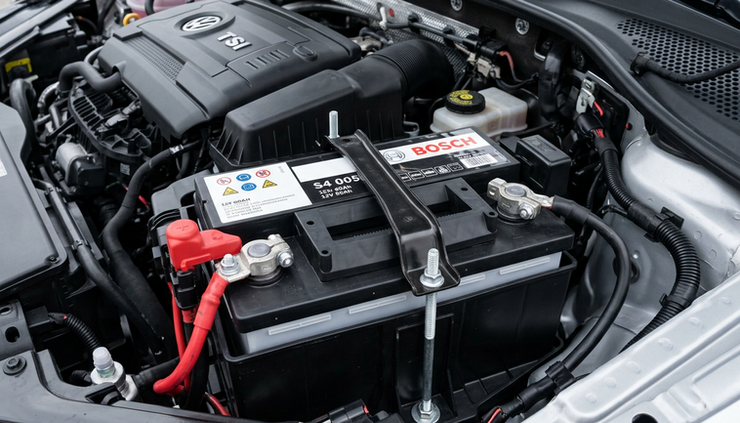
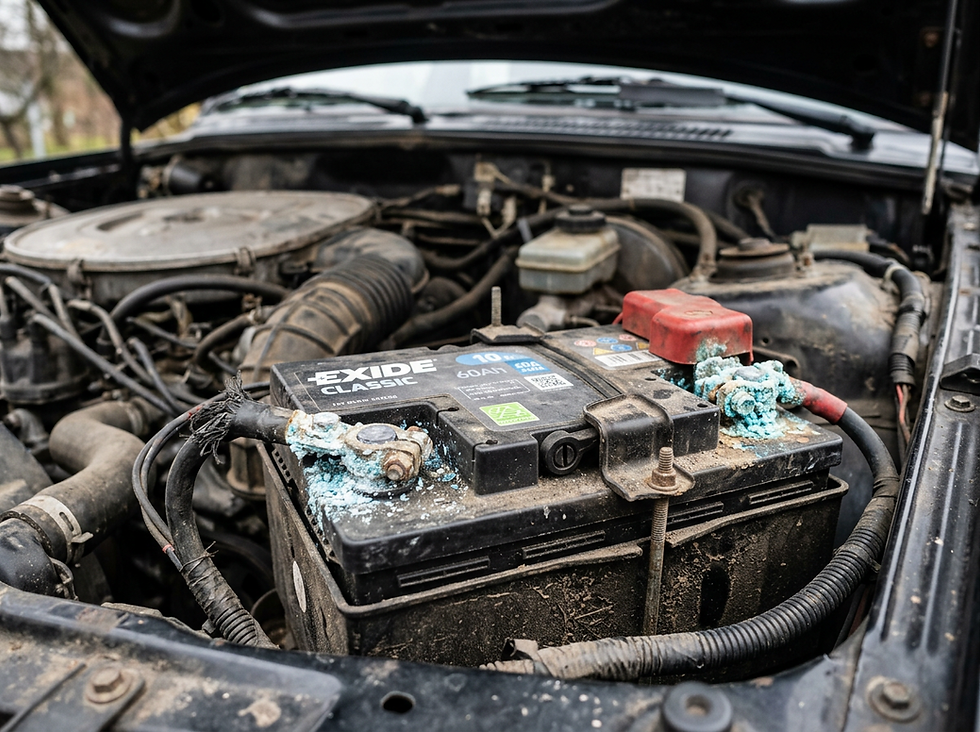
The easiest way to choose a replacement is to inspect the existing battery, if it is correct for the car. Look for the specification printed on the top or side label. It may show details such as:
Voltage, usually 12V
Capacity in Ah
Cold cranking amps, often shown as CCA
Battery type, such as flooded, EFB, or AGM
Model code or case size
Terminal layout and polarity
The owner’s manual is the better source if the current battery looks mismatched, has been changed before, or sits loosely in the tray. Some cars also have battery information on a sticker near the battery compartment.
Do not choose a battery simply because the terminals connect and the engine starts. A battery can be physically compatible but still wrong for the car, especially in modern vehicles with electronic modules, sensors, start-stop systems, and higher accessory loads.
Match the physical size and terminal layout
A car battery must fit securely in the tray. If it is too tall, the bonnet or cover may press against it. If it is too small, it can move while driving. That movement can damage cables, terminals, or the battery case.
Battery sizes are often described through regional standards such as JIS, DIN, or BCI. In Singapore and many Asian-market cars, JIS sizes are common. European cars often use DIN-style batteries. The code helps define the battery’s approximate dimensions and layout.
Terminal layout matters just as much. Check:
Specification | What to check | Why it matters |
Length, width, height | The battery must sit properly in the tray | Loose or oversized batteries can cause damage |
Terminal position | Positive and negative posts must match the cable reach | Reversed layout may prevent safe installation |
Terminal type | Some cars use standard posts, others use different fittings | Poor contact can cause starting and charging issues |
Hold-down design | Clamp points must line up | The battery must not shift while driving |
Never stretch cables to make a battery fit. Battery cables are designed for a specific route and tension. Forcing them can lead to bad connections or electrical faults.
Choose the right battery type for the vehicle
Battery chemistry affects performance, lifespan, and suitability. The main types found in everyday cars are flooded lead-acid, EFB, and AGM.
Flooded lead-acid batteries are common in older or simpler cars without start-stop systems. They are usually the most affordable option, but they may not handle repeated deep cycling as well as newer designs.
EFB batteries, or enhanced flooded batteries, suit many cars with basic start-stop systems. They handle frequent engine restarting better than standard flooded batteries.
AGM batteries, or absorbent glass mat batteries, are built for higher electrical demand. They are often used in premium cars, vehicles with heavy electronics, and many advanced start-stop systems. AGM batteries can cost more, but replacing one with a cheaper flooded battery can cause problems.
If your car came with AGM, stay with AGM unless the manufacturer clearly allows another type. Modern charging systems may be calibrated for that battery. The wrong type can shorten battery life and may trigger dashboard warnings.
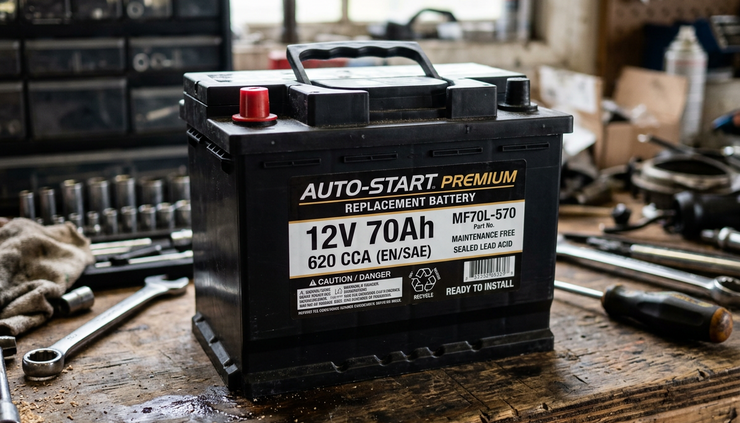
Understand CCA, Ah, and reserve capacity
Once the size and type are correct, compare the performance ratings.
CCA stands for cold cranking amps. It measures how much current a battery can deliver to start the engine in cold conditions. In Singapore’s climate, freezing starts are not the issue, but CCA still matters because it shows starting strength. A larger engine, diesel engine, or high-compression engine usually needs stronger cranking power.
Ah stands for ampere-hour. It indicates how much electrical energy the battery can store. A higher Ah rating can support more accessories and repeated starts, but it must still be compatible with the car’s charging system and physical battery size.
Reserve capacity tells you how long the battery can supply power if the charging system fails. Not every label shows it, but it is useful when comparing similar batteries.
As a rule, match the original specification closely. Slightly higher CCA is usually fine if the battery fits and meets the correct type. Going far below the recommended CCA or Ah rating is where trouble starts.
Pay attention to start-stop systems and battery coding
Many newer cars switch the engine off at traffic lights and restart it when the driver moves off. This saves fuel, but it makes the battery work harder. A standard battery may not cope with the frequent cycling.
If your car has start-stop, check whether it needs EFB or AGM. Using the wrong battery can lead to:
Start-stop not working properly
Shorter battery life
Warning messages
Poor charging behaviour
Electrical system faults
Some vehicles also need battery registration or coding after replacement. This tells the car’s battery management system that a new battery has been installed. Without it, the car may continue charging as if the old battery is still fitted.
This is especially common in many European models and higher-end vehicles. If unsure, ask the workshop whether coding is needed before installation.
Factor in Singapore driving conditions
Heat is hard on batteries. In a warm climate, under-bonnet temperatures can speed up battery wear. Short trips also add stress because the alternator may not fully recharge the battery before the next start.
Urban driving with frequent starts, air-conditioning, dash cameras, powered tailgates, and infotainment systems can increase electrical load. If the car is often parked for long periods, the battery may drain slowly from standby systems.
For local driving, it often makes sense to choose a battery that meets or slightly exceeds the manufacturer’s recommended rating, as long as the type, size, and charging compatibility are correct.
A quality battery with the right specification usually gives better value than the cheapest battery that happens to fit.
What to check before buying
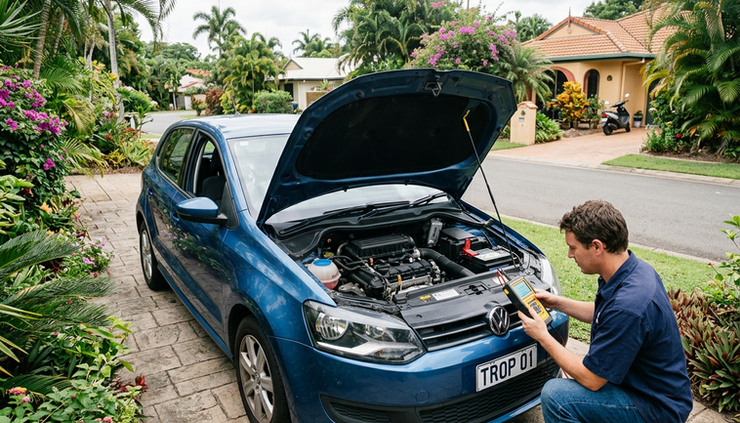
Before replacing your battery, confirm these points:
The car requires a 12V battery
The case size matches the original battery
The positive and negative terminals are in the correct positions
The battery type matches the vehicle system
The CCA rating meets the manufacturer’s recommendation
The Ah rating is suitable for the car
The battery can be secured properly
Battery coding is done if required
If two options look similar, choose the one that matches the original equipment specification more closely. A battery is part of the car’s electrical system, not just a starting aid.
The right battery is the one your car was built to use
Choosing the right battery specification for your car comes down to matching the vehicle, not guessing by price or size. Start with the owner’s manual or original battery label. Confirm the physical fit, terminal layout, battery type, CCA, and Ah rating. If the car has start-stop or battery management, check whether coding is needed.
A well-matched battery starts the engine reliably, supports the electronics properly, and lasts longer in daily use. When in doubt, use the manufacturer’s specification as the baseline and avoid shortcuts that only look cheaper on the day of purchase.
Comments