
Why Is My Car Battery Light On and What Should I Do

That small battery icon on your dashboard can feel harmless at first. The car may still drive normally, the air-conditioning may still blow cold, and the engine may sound fine. But when the battery light comes on, your car is warning you about the charging system, not just the battery itself.
If you ignore it, the car may run only until the existing battery charge is used up. After that, the engine can stall, the lights can dim, and you may not be able to restart the car.

What the battery light usually means
The battery light does not always mean the battery is dead. It usually means the car is not getting the electrical charge it needs while the engine is running.
When your engine runs, the alternator produces electricity. That power keeps the battery charged and supplies electrical systems such as:
Headlights
Air-conditioning blower
Engine control systems
Radio and infotainment
Power steering in many modern cars
Wipers and demisters
If the alternator, belt, wiring, or battery connection fails, the dashboard light turns on. The car may continue running for a short while because the battery still has stored power. That remaining power is limited.
A key point to remember is this: a battery light while driving is more urgent than a battery that simply struggles to start the car in the morning.
Common reasons your car battery light is on
Several parts can trigger the warning. Some are simple. Others need quick repair.
The alternator is failing
The alternator is the most common cause. If it cannot produce enough voltage, the battery takes over. You may notice dim lights, weak air-conditioning fan speed, or warning lights appearing one after another.
In Singapore’s hot weather and stop-start traffic, alternators work hard. Heat can shorten the life of electrical parts, especially in older cars.
The alternator belt is loose or broken
The alternator relies on a belt driven by the engine. If the belt slips, cracks, or breaks, the alternator will not charge properly.
A broken belt may also affect other systems, depending on your car. If you hear squealing from the engine bay, especially when starting or turning on the air-conditioning, get it checked.

The battery terminals are loose or corroded
The battery may be healthy, but poor contact can interrupt charging. Look for white, blue, or greenish deposits around the terminals. Loose clamps can also cause flickering lights or random electrical faults.
Do not touch battery corrosion with bare hands. Battery acid residue can irritate skin and damage clothing.
The battery is old or weak
Car batteries do not last forever. Heat, short trips, and long parking periods can weaken them. A weak battery may not accept or hold charge properly, which can trigger the warning light.
If your car has slow cranking, frequent jump-starts, or electrical glitches, the battery may be near the end of its service life.
There is a wiring or sensor problem
Modern cars use sensors and control modules to monitor charging. A damaged wire, blown fuse, or faulty voltage regulator can also turn the light on.
This is why guessing can get expensive. A proper charging system test can separate a bad battery from a bad alternator or wiring fault.
What you should do when the light comes on
If the battery light turns on while driving, stay calm but treat it seriously.
Reduce electrical load
Turn off anything you do not need, such as:
Radio
Seat heaters, if fitted
Interior lights
Phone chargers
Rear demister
Keep headlights on if visibility requires them. Safety comes first.
Drive to a safe place
If the car still feels normal, head towards a safe stopping point, workshop, petrol station, or car park. Avoid long detours. The car may stop once the battery charge drops too low.
If other warning lights appear, the steering feels heavy, the temperature gauge rises, or the engine sounds unusual, pull over safely and switch off the engine.
Do not keep restarting the car
Each restart uses a large amount of battery power. If the charging system is not working, restarting can drain what little power remains.
If the car stalls and will not restart, call roadside assistance rather than repeated cranking.

Quick checks you can do safely
You do not need to be a mechanic to make a few basic checks. Only do these if the car is parked safely, the engine bay is not dangerously hot, and you feel confident.
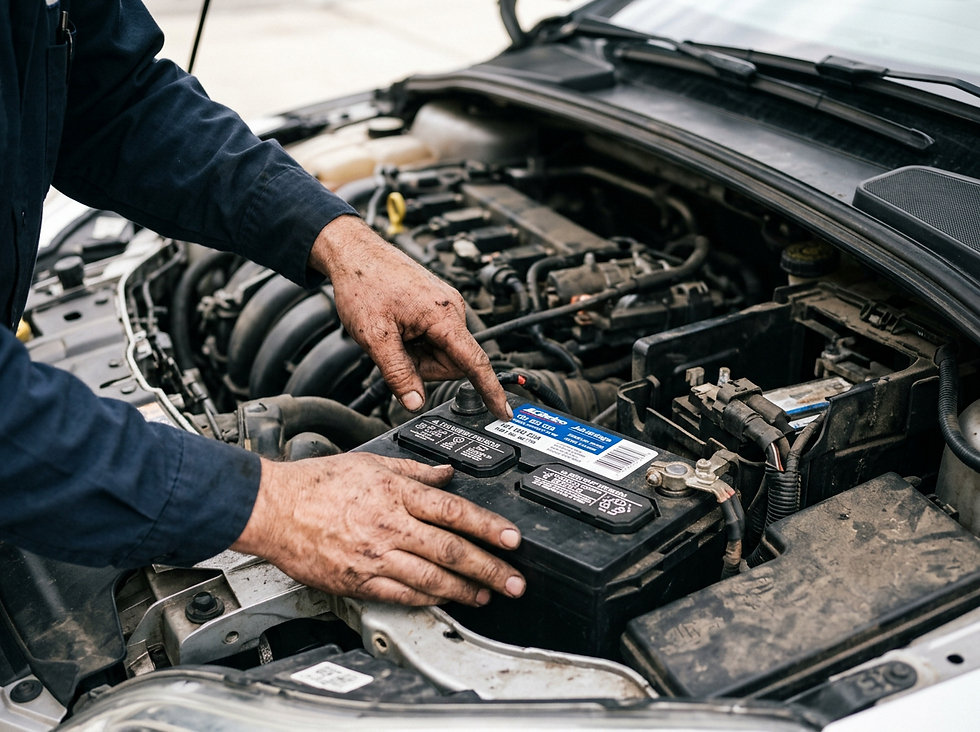
Check the battery terminals. They should be tight and clean. If a clamp moves easily by hand, that may be the issue.
Look at the belt. If you can see obvious cracks, fraying, or a missing belt, do not keep driving.
Listen for unusual sounds. A squealing belt or grinding noise from the alternator area needs attention.
Smell for burning. A burnt rubber or electrical smell is a warning sign. Turn the engine off and get help.
Avoid disconnecting the battery while the engine is running. Older advice sometimes suggested this as a test, but it can damage electronics in modern cars.
When to call a workshop or roadside help
Call for help if the battery light stays on after restarting, comes on together with other warning lights, or appears while driving at night or in heavy rain. You depend more on lights, wipers, and electrical systems in those conditions.
A workshop can test:
Battery health
Alternator output
Charging voltage
Belt condition
Fuses and wiring
Parasitic drain, if the battery keeps going flat
A proper test is usually quick and saves guesswork. Replacing the battery alone may not fix the issue if the real problem is the alternator.

The practical takeaway
A battery warning light is not something to leave for the next service. It means your car may be running on borrowed time. Reduce electrical use, head to a safe place, and get the charging system checked as soon as possible.
If the light appears and stays on, avoid long drives. The safest move is simple: treat it as an electrical charging fault until a mechanic proves otherwise.
Comments